

By Johnson Emmanuel
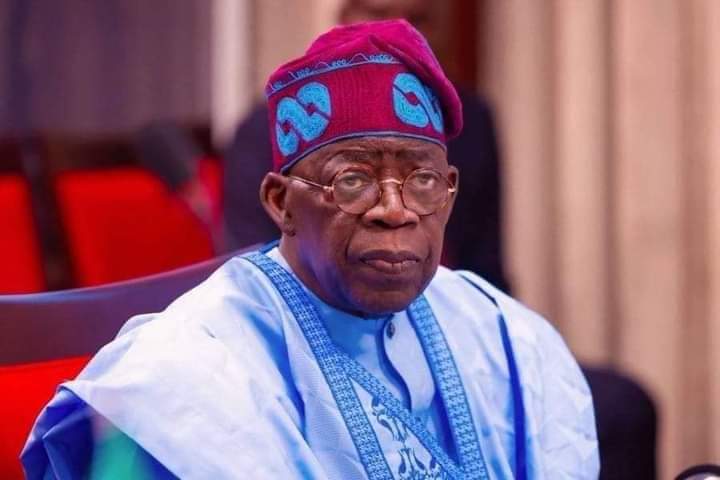
President Bola Ahmed Tinubu has said that the inauguration of the new Economic Community of West African States (ECOWAS) headquarters in Abuja marks a renewed commitment to regional integration, economic transformation and collective prosperity. Represented by Vice President Kashim Shettima at the recent commissioning ceremony, Tinubu described the new complex, known as the “Eye of Africa,” as “a symbol of renewal and resilience” that reflects confidence in the future of the regional bloc. According to a statement issued by Stanley Nkwocha, Senior Special Assistant to the President on Media and Communications in the Office of the Vice President, Tinubu called for ECOWAS to move beyond being a regional market to becoming “a regional production base” driven by industrialisation, manufacturing, innovation and stronger regional value chains.
DECISION HIGHLIGHT
The new headquarters reinforces ECOWAS’ strategic shift from trade integration towards production-led regional economic development, with greater emphasis on industrial competitiveness and collective resilience.
DECISION MEMO
The principal consequence of the inauguration is not the addition of a new administrative complex, but the renewed policy direction it represents for West Africa’s economic integration. Tinubu used the occasion to redefine regional integration as an industrial and productive agenda rather than one centred primarily on trade liberalisation.
By advocating a transition from a regional market to a regional production base, the President signalled that future integration should focus on expanding manufacturing capacity, strengthening cross-border value chains and increasing intra-regional production. Such a shift would improve economic resilience, reduce external dependence and deepen the region’s capacity to generate employment and investment.
Tinubu described the headquarters as “a symbol of renewal and resilience” and said it reflects confidence in the shared aspirations of member states. While acknowledging ECOWAS’ achievements in peacebuilding, democracy, trade and free movement, he argued that the bloc must now confront terrorism, extremism, economic fragility, food insecurity, climate change, public health pressures and youth unemployment through stronger economic cooperation.
The President also linked economic integration with regional security, noting the recent withdrawal of three member states and urging continued dialogue and engagement. His remarks suggest that sustaining regional cohesion has become both an economic and geopolitical priority.
Supporting the broader vision, Dr Omar Touray, President of the ECOWAS Commission, described the headquarters as a symbol of regional cooperation, while Yu Dunhai, Chinese Ambassador to Nigeria, reaffirmed China’s commitment to Africa’s development partnership through infrastructure support.
DATA BOX
- Project: New Economic Community of West African States headquarters
- Location: Abuja
- Facility name: “Eye of Africa”
- Occasion: Commissioning ceremony
- Representing the President: Vice President Kashim Shettima
- Strategic priorities highlighted:
- Regional industrialisation
- Manufacturing
- Value chain development
- Intra-regional trade
- Innovation
- Peace and security
- Regional context:
- ECOWAS has existed for more than 50 years.
- Three member states have recently withdrawn from the bloc.
WHO WINS / WHO LOSES
Who wins
- Businesses positioned to benefit from deeper regional integration.
- Manufacturers and exporters serving West African markets.
- Investors seeking larger integrated markets.
- Member states pursuing regional value chain development.
Who loses
- Economies dependent on fragmented regional markets.
- Businesses disadvantaged by weak cross-border integration.
- The region if political fragmentation weakens collective economic initiatives.
POLICY SIGNALS
ECOWAS is signalling a stronger emphasis on productive integration, where industrial capacity, manufacturing and regional value chains become central pillars of economic cooperation alongside peace and security.
INVESTOR SIGNAL
Tinubu’s position reinforces the long-term investment case for manufacturing, logistics, transport infrastructure, agro-processing and cross-border trade serving the West African market. Investors should monitor policy measures that translate the industrial integration agenda into practical implementation.
RISK RADAR
The success of the regional agenda will depend on political cohesion, security cooperation and sustained commitment by member states. Persistent insecurity, policy divergence and reduced regional participation could slow progress towards the production-led integration model advocated by the President.
Discover more from StakeBridge Media
Subscribe to get the latest posts sent to your email.