

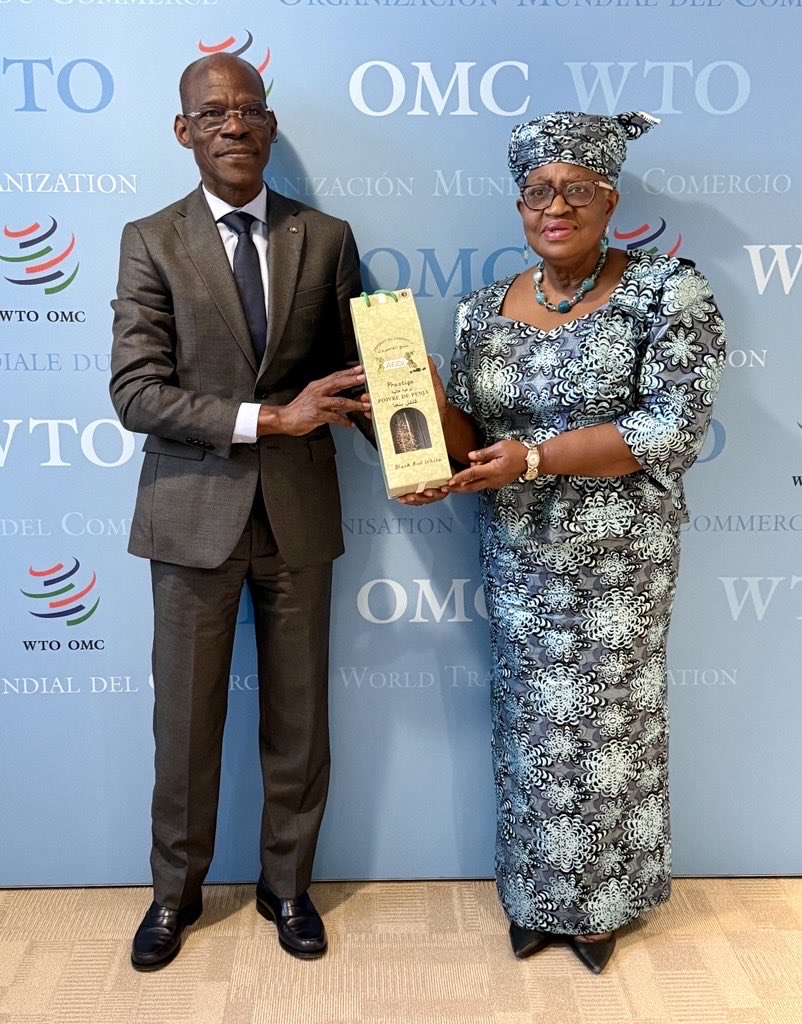
By Johnson Emmanuel
The Director-General (DG) of the World Trade Organization (WTO), Dr. Ngozi Okonjo-Iweala, recently held an introductory meeting with Denis Bohoussou, Director-General (DG) of the African Organization for Intellectual Property (Organisation Africaine de la Propriété Intellectuelle, OAPI), to explore how Africa can derive greater global value from its intellectual property. The discussions focused on pharmaceutical manufacturing, vaccine production challenges, utilisation of the WTO’s Agreement on Trade-Related Aspects of Intellectual Property Rights (TRIPS) Waiver, and opportunities for OAPI to benefit from the joint WTO, World Health Organization (WHO) and World Intellectual Property Organization (WIPO) initiative that assists developing countries in building regulatory frameworks for vaccine and pharmaceutical manufacturing.
DECISION HIGHLIGHT
The WTO and OAPI are aligning intellectual property governance with industrial policy, signalling a shift from protecting innovation towards leveraging intellectual property as a tool for pharmaceutical manufacturing and economic development.
DECISION MEMO
Africa’s intellectual property debate is increasingly moving beyond legal protection towards commercial utilisation. Okonjo-Iweala’s engagement with OAPI reflects an emerging policy emphasis on converting intellectual assets into industrial capacity, particularly in pharmaceuticals where regulatory capability and technology access remain major constraints.
The inclusion of the TRIPS Waiver and the WTO-WHO-WIPO collaboration indicates that intellectual property policy is being integrated with manufacturing readiness rather than treated as a standalone legal framework. If effectively implemented, stronger regulatory systems could improve Africa’s ability to attract pharmaceutical investment and expand regional production.
As Okonjo-Iweala stated, “A useful introductory meeting with the African Organization for Intellectual Property… Focused on how Africa can make better global use of its Intellectual Property.”
She added that the discussions covered “challenges confronting the pharmaceutical industry with respect to manufacturing of vaccines and the use of the WTO’s TRIPS Waiver” and explored how the joint WTO-WHO-WIPO initiative could help developing countries “evaluate and build appropriate regulatory frameworks for vaccine and other manufacturing of pharmaceutical products.”
DATA BOX
- Participants:
- Ngozi Okonjo-Iweala, Director-General, World Trade Organization.
- Denis Bohoussou, Director-General, African Organization for Intellectual Property.
- Discussion areas:
- Intellectual property commercialisation.
- Vaccine manufacturing.
- Pharmaceutical production.
- TRIPS Waiver implementation.
- Regulatory capacity development.
- Institutional collaboration:
- World Trade Organization.
- World Health Organization.
- World Intellectual Property Organization.
- African Organization for Intellectual Property.
WHO WINS / WHO LOSES
Winners
- African pharmaceutical manufacturers.
- Research institutions and innovators.
- Countries seeking vaccine production capacity.
- Investors in life sciences and biotechnology.
Losers
- Jurisdictions that fail to strengthen regulatory institutions.
- Manufacturers unable to meet evolving international production standards.
POLICY SIGNALS
- Intellectual property is becoming an instrument of industrial development rather than solely legal protection.
- Regulatory reform is emerging as a prerequisite for expanding pharmaceutical manufacturing.
- Multilateral institutions are deepening cooperation to strengthen Africa’s health manufacturing ecosystem.
INVESTOR SIGNAL
The policy direction strengthens the long-term investment case for pharmaceutical manufacturing, biotechnology, regulatory consulting, research commercialisation and intellectual property services across Africa. Progress will depend on countries translating multilateral support into credible domestic regulatory frameworks.
RISK RADAR
The commercial benefits of intellectual property reforms remain contingent on national implementation. Weak regulatory institutions, limited manufacturing capacity, financing constraints and uneven adoption of the TRIPS Waiver could delay Africa’s ambition to build competitive pharmaceutical industries.
Discover more from StakeBridge Media
Subscribe to get the latest posts sent to your email.