

By Kingsley Ani
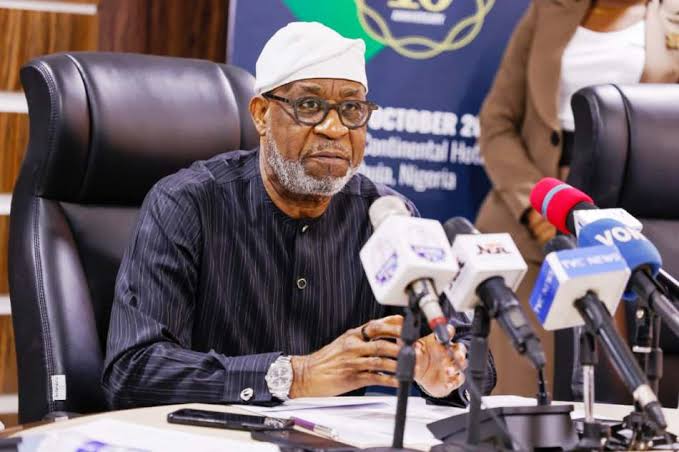
The Honourable Minister of Solid Minerals Development, Dr. Dele Alake, represented by Martins Imonitie, Managing Director and Chief Executive Officer of Nigeria Solid Minerals Company, recently called on African countries to move beyond raw mineral exports and focus on value addition, industrialisation and regional collaboration ahead of the 5th African Natural Resources and Energy Investment Summit (AFNIS) in Abuja. Speaking at a press conference, Alake said that the continent must leverage rising global demand for critical minerals and energy transition opportunities to drive economic transformation. Archibald Troko, Director of Strategy and Platform Development at Core International, disclosed that AFNIS has attracted more than $600m in investments over the last four years.
DECISION HIGHLIGHT
Nigeria and other African resource-rich economies are increasingly seeking to shift from commodity extraction models towards value-chain ownership and industrial processing.
DECISION MEMO
The central message from AFNIS is that Africa’s resource advantage may no longer lie in extraction alone but in its ability to capture greater economic value from processing, manufacturing and supply-chain participation.
For decades, many African economies have remained exporters of raw minerals while importing higher-value finished products. Alake’s intervention reflects growing concern that this model limits employment creation, industrial development and long-term wealth retention.
According to Alake, “Africa must move from being merely a source of raw materials production to becoming a centre of value creation, industrialisation and shared prosperity.” He added that “our resources must become catalysts for economic transformation, job creation, technological advancement, infrastructure development and long-term wealth creation for African people.”
The timing is significant. Global competition for critical minerals is intensifying as countries seek secure supply chains for energy transition technologies. This creates an opportunity for African nations to negotiate stronger positions within global value chains rather than remaining suppliers of unprocessed commodities.
The summit’s theme, ‘One Africa, One Resource Vision,’ suggests an emerging push towards regional coordination on project financing, technology transfer, energy infrastructure and mineral processing. Such collaboration could improve bargaining power and attract larger pools of investment.
Archibald Troko, Director of Strategy and Platform Development at Core International, provided evidence of investor interest, revealing that AFNIS has attracted over $600m in investments within four years. Troko also stressed the need to “seek development partners to help de-risk the sector so that local investors can also begin to take their share.”
The broader implication is that African mining policy is evolving from resource ownership towards resource monetisation, industrialisation and economic integration.
DATA BOX
- Investment attracted through AFNIS:
- More than $600m
- AFNIS lifespan:
- Five years
- Summit edition:
- 5th African Natural Resources and Energy Investment Summit
- Summit theme:
- “One Africa, One Resource Vision”
- Key focus areas:
- Critical minerals
- Energy infrastructure
- Regional value chains
- Project financing
- Technology transfer
- Countries expected:
- Democratic Republic of Congo
- Kenya
- Uganda
- South Sudan
- Somalia
- Liberia
- Mauritania
WHO WINS / WHO LOSES
Who Wins
- Mineral processing companies
- African manufacturing industries
- Resource-rich economies pursuing value addition
- Technology and infrastructure providers
- Local investors if sector de-risking succeeds
Who Loses
- Economies dependent on raw mineral exports
- Businesses positioned solely around commodity extraction
- Countries unable to develop processing capacity and industrial ecosystems
POLICY SIGNALS
- Resource beneficiation is becoming a strategic policy priority.
- African governments are seeking greater participation in mineral value chains.
- Regional collaboration is gaining prominence in mining and energy policy.
- Investment attraction is increasingly tied to industrialisation objectives rather than extraction volumes.
INVESTOR SIGNAL
The combination of rising global demand for critical minerals, growing policy support for local processing and more than $600m already mobilised through AFNIS suggests expanding opportunities in mineral beneficiation, refining, logistics, energy infrastructure and industrial processing across Africa.
RISK RADAR
- Infrastructure deficits may constrain value-addition ambitions.
- Policy inconsistency could discourage long-term investment.
- Technology and financing gaps may slow industrialisation efforts.
- Global commodity price volatility remains a key risk.
- Competition from established mineral-processing jurisdictions could limit market share gains.
Discover more from StakeBridge Media
Subscribe to get the latest posts sent to your email.