
By Ovio Peters
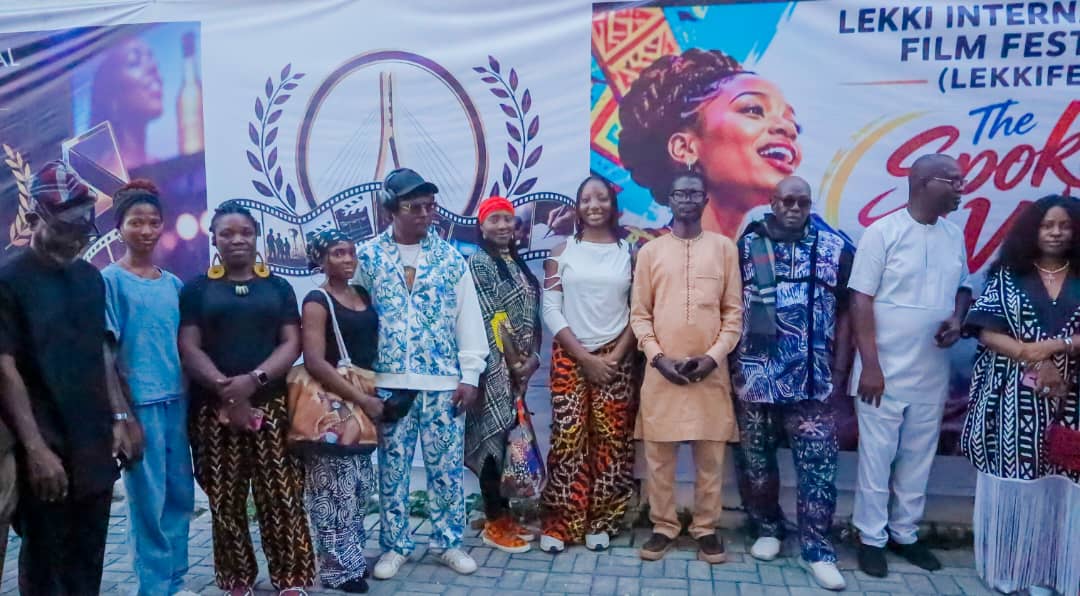
The 2026 Lekki International Film Festival (LEKKIFEST), held in Lagos from November 17 to 21, recognised Diane Modeme with the Best Spoken and Written Word Award and Moyosore Olowokure with the Best Cinematic Interpretation of Spoken Word Award. Modeme emerged ahead of nominees Ruth Mahogany and Testimony Kolapo. The awards formed part of the festival’s multidisciplinary programme, which brought together literature, spoken-word performance, cinema and commercial filmmaking to explore opportunities for creative collaboration and audience engagement.
DECISION HIGHLIGHT
The recognition of Modeme and Olowokure establishes two distinct dimensions of literary performance: the creative value of language and its potential for audiovisual interpretation. Their awards also reinforce LEKKIFEST’s attempt to position literature alongside film and advertising within a broader creative-industry framework.
DECISION MEMO
The significance of LEKKIFEST’s Spoken and Written Word awards extends beyond celebrating two individual performers. It raises an important question about the commercial and institutional recognition of literary performance within Nigeria’s evolving creative economy.
Spoken word occupies an interesting intersection between poetry, theatre, storytelling and performance. Unlike conventional literary publishing, its value is communicated through the combined influence of language, voice, expression, rhythm and audience connection. This makes it adaptable to live entertainment, digital content, audiovisual production and commercial communication.
However, artistic visibility does not automatically translate into economic sustainability. The challenge confronting spoken-word practitioners is how to convert audience engagement into repeatable revenue, professional opportunities and ownership of commercially exploitable creative works.
Modeme’s recognition for Best Spoken and Written Word acknowledges the literary foundation of the discipline. Yet, the wider industry implications depend on whether such recognition encourages stronger publishing opportunities, performance bookings, institutional commissions and sustainable platforms for emerging writers.
Olowokure’s award introduces another dimension. Best Cinematic Interpretation of Spoken Word acknowledges the possibilities created when literary performance is translated into moving images. Through cinematography, sound design, editing and visual storytelling, poetry can acquire additional expressive dimensions and reach audiences beyond conventional performance venues.
This intersection is particularly relevant in an increasingly digital media environment, where content distribution is no longer restricted by geographical boundaries. A carefully produced spoken-word film can circulate across streaming platforms, social media, cultural institutions and international festivals.
Nevertheless, audiovisual adaptation introduces questions of intellectual property ownership, licensing, performer compensation and revenue distribution. Without clear contractual arrangements, creators risk surrendering commercial control over works whose artistic value they originated.
The festival’s multidisciplinary approach offers a useful institutional framework for addressing these opportunities. Its simultaneous recognition of literary performance, cinema and commercial filmmaking suggests that creative disciplines need not operate within isolated professional markets.
The other award categories reinforce this proposition. Aljana secured Best Feature Film and the Segun Oyekunle Award for Best Overall Film, while Juste Une Nuit received Best Short Film, Tout le Monde est Là won Best Documentary Film and NKOA received Best AI/Animation.
Commercial filmmaking also featured prominently. Noah’s Ark won Best Commercial Film for MTN’s 25 Years Still Counting What Matters. Up in the Sky received Best Creative Concept in Commercial Film for Nack International Men’s Day, while Insight won Best Direction in Commercial Film for Pepsi’s Big Big Tinz.
These distinctions demonstrate the commercial and cultural breadth of the festival. They also expose an opportunity for literary practitioners to engage advertising agencies, production companies, brands and digital media organisations.
For instance, spoken-word artists could contribute to brand storytelling, documentary narration, campaign development and audiovisual productions. Such collaborations could create additional income streams while extending the reach of literary expression.
However, commercial integration must not reduce literature to a subordinate advertising instrument. Its independent artistic identity, intellectual ownership and capacity for social commentary remain important sources of value.
LEKKIFEST’s institutional challenge is therefore to move beyond annual award recognition towards sustained professional development, production partnerships and distribution opportunities. The festival’s relevance will ultimately depend less on the number of disciplines represented than on the productive relationships it creates between them.
DATA BOX
- Festival: November 17–21, 2026, Lagos.
- Theme: The Creative Community and Social Action.
- Best Spoken and Written Word: Diane Modeme.
- Other nominees: Ruth Mahogany and Testimony Kolapo.
- Best Cinematic Interpretation of Spoken Word: Moyosore Olowokure.
- Best Feature Film: Aljana.
- Best Overall Film: Aljana.
- Best Short Film: Juste Une Nuit.
- Best Documentary: Tout le Monde est Là.
- Best AI/Animation: NKOA.
WHO WINS / WHO LOSES
Modeme and Olowokure gain institutional recognition and opportunities for wider professional exposure. Writers, poets, filmmakers, advertising agencies and production companies could benefit from stronger interdisciplinary collaboration.
However, practitioners without access to production financing, distribution networks and intellectual property protection risk remaining outside the commercial value chain.
POLICY SIGNALS
Creative-industry development requires accessible production financing, intellectual property enforcement, professional training and structured collaboration between literary organisations, film institutions and commercial media companies. Festival recognition should be connected to measurable opportunities for emerging practitioners.
INVESTOR SIGNAL
The intersection of spoken word, publishing, audiovisual production and advertising presents opportunities in digital content, creative production, licensing and intellectual property exploitation. Investment decisions should prioritise monetisation models, audience reach, ownership rights and distribution capacity.
RISK RADAR
The principal risks include weak monetisation, inadequate financing, copyright disputes, inconsistent distribution and excessive dependence on festival exposure. Without institutional follow-through, recognition may generate visibility without sustainable economic returns.
Ultimately, LEKKIFEST’s recognition of Modeme and Olowokure provides an important reminder that literature can participate in the wider creative economy without losing its independent artistic identity. The real measure of progress, however, will be whether recognition develops into sustainable careers, commercially productive partnerships and stronger creative infrastructure.
Ovio Peters is a journalist, reporting on arts, creative economy, business, policy and economic developments through a sharp and analytical lens.
Discover more from StakeBridge Media
Subscribe to get the latest posts sent to your email.