

By Jennete Ugo Anya
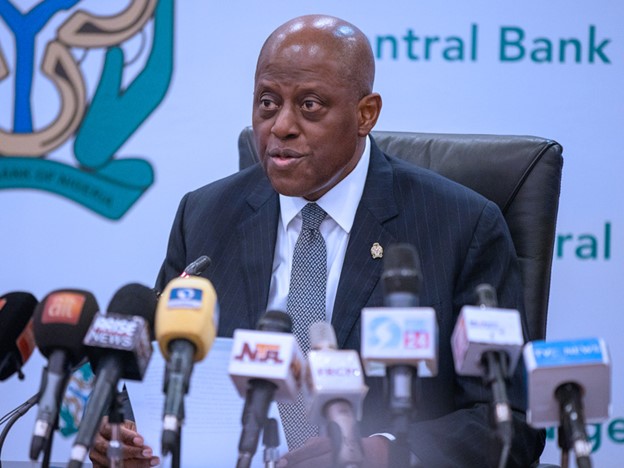
The Central Bank of Nigeria (CBN), under the leadership of Mr. Olayemi Cardoso, has increased the maximum foreign exchange remittance limit for tuition fees of Nigerian students pursuing undergraduate and postgraduate studies abroad from $15,000 to $25,000 per semester. The revision forms part of the Foreign Exchange Manual, Fourth Edition, recently unveiled in Abuja and effective from 1 June 2026. The new framework applies to tuition payments processed through Authorised Dealer Banks and is designed to improve transparency, efficiency and confidence within Nigeria’s foreign exchange market. The Manual also retains a separate maintenance allowance framework, capped at $5,000 per quarter for eligible students living off-campus or receiving separately billed maintenance support.
According to the Manual: “Payment of tuition fees for undergraduate/postgraduate studies shall be subject to a maximum limit of USD25,000.00 per semester.”
The revised framework forms part of broader foreign exchange reforms that also increased allowable advance import payments from 15 percent to 30 percent and introduced procedural adjustments for Personal Travel Allowance and Business Travel Allowance disbursements.
DECISION HIGHLIGHT
The CBN is liberalising access to foreign exchange for educational payments while maintaining regulatory oversight, signalling a shift from restrictive allocation towards structured market facilitation.
DECISION MEMO
The increase in tuition remittance limits represents more than an administrative adjustment. It reflects the central bank’s broader effort to rebuild confidence in the foreign exchange market through greater clarity, predictability and procedural standardisation.
For several years, access to foreign exchange for overseas education became a significant challenge for Nigerian households amid foreign exchange shortages, market fragmentation and administrative bottlenecks. The revised limit acknowledges the reality of rising international tuition costs and the increasing financial burden faced by Nigerian students studying abroad.
From a policy perspective, the decision is consistent with the central bank’s ongoing strategy of replacing discretionary practices with transparent rule-based frameworks. Rather than creating unrestricted access, the regulator has established a higher ceiling supported by defined documentation requirements and institutional controls.
The separation of tuition payments from maintenance allowances also reflects a compliance-driven approach. By ensuring that tuition remittances are paid directly to educational institutions while maintenance allowances remain subject to separate limits, the central bank is seeking to reduce misuse and strengthen transaction traceability.
More broadly, the reform supports Nigeria’s efforts to improve the credibility of its foreign exchange ecosystem. Educational remittances constitute a significant component of legitimate foreign currency demand, and facilitating such transactions through formal channels may help strengthen confidence among households, banks and international counterparties.
The policy also aligns with the wider objective of harmonising foreign exchange procedures under a unified regulatory framework that balances accessibility with market discipline.
DATA BOX
Tuition Remittance Framework
- Previous tuition remittance limit: $15,000 per semester
- New tuition remittance limit: $25,000 per semester
- Effective date: 1 June 2026
- Applicable categories:
- Undergraduate studies
- Postgraduate studies
- Processing channel:
- Authorised Dealer Banks
Maintenance Allowance
- Maximum allowance: $5,000 per quarter
- Applicable where:
- Student lives off-campus
- Maintenance fees billed separately
- Payment destination:
- Directly to student
Ineligible Educational Categories
- Nursery programmes
- Primary education
- Secondary education
- Foundation programmes
- A-Level programmes
Required Documentation
- Form A
- Evidence of admission
- Tuition fee schedule
- International passport biodata page
- Student identification card (returning students)
- First degree certificate for postgraduate applicants
Other Foreign Exchange Manual Reforms
- Advance import payment limit increased:
- From 15 percent
- To 30 percent
- PTA/BTA disbursement:
- 25 percent cash
- 75 percent electronic
WHO WINS / WHO LOSES
Winners
- Nigerian students studying abroad.
- Families funding overseas education.
- Commercial banks processing foreign exchange transactions.
- International educational institutions receiving tuition payments.
- Foreign exchange market participants benefiting from greater procedural clarity.
Potential Losers
- Informal foreign exchange intermediaries previously servicing tuition payments outside official channels.
- Market participants benefiting from administrative inefficiencies and fragmented procedures.
- Households seeking foreign exchange support for educational categories excluded under the revised framework.
POLICY SIGNALS
- The Central Bank of Nigeria is prioritising transparency and procedural certainty in foreign exchange management.
- Legitimate foreign exchange demand is receiving greater accommodation within formal channels.
- Regulatory reforms are moving towards standardisation rather than discretionary intervention.
- Foreign exchange liberalisation is being pursued alongside stronger compliance controls.
- Confidence-building measures remain central to monetary and exchange-rate policy.
INVESTOR SIGNAL
The revision reinforces the central bank’s commitment to a more transparent and functional foreign exchange market. By providing clearer rules for educational remittances and harmonising broader market procedures, the regulator is signalling policy consistency and administrative predictability. Investors often interpret such reforms as indicators of improving institutional credibility, particularly when combined with ongoing efforts to standardise market practices and strengthen foreign exchange governance.
RISK RADAR
- Continued pressure on foreign exchange demand from education-related outflows.
- Potential mismatch between foreign exchange supply and rising remittance requirements.
- Administrative delays in processing documentation.
- Exchange-rate volatility affecting actual education costs despite higher remittance limits.
- Risk of compliance breaches through inaccurate documentation.
- Persistent dependence on overseas education services contributing to foreign currency demand.
The broader implication is that the central bank is gradually repositioning foreign exchange administration from a scarcity-management framework towards a rules-based facilitation model, seeking to improve market confidence while maintaining regulatory control over foreign currency flows.
Discover more from StakeBridge Media
Subscribe to get the latest posts sent to your email.