

By Kingsley Ani
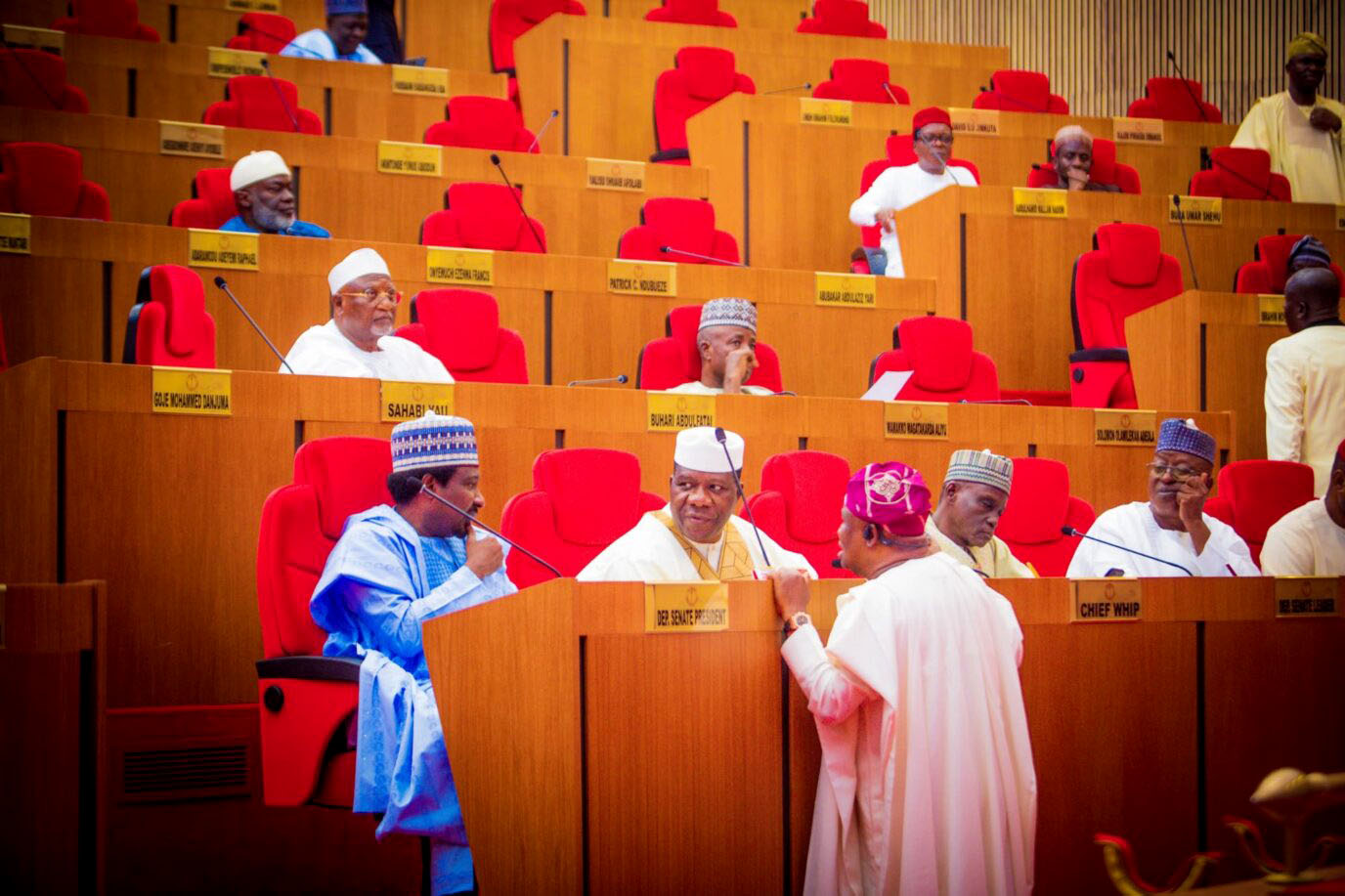
The Nigerian Senate has approved a major restructuring of the country’s sugar-sweetened beverages excise regime, replacing the existing flat-rate levy of N10 per litre with a percentage-based tax system. The decision followed the adoption of the report of the Joint Committee on Finance and Customs, Excise and Tariff on the Customs, Excise Tariff (Amendment) Bill, presented by Senator Sani Musa, Chairman of the Senate Committee on Finance. Under the new framework, the Honourable Minister of Finance and Coordinating Minister of the Economy, Mr. Taiwo Oyedele, will determine a value-based levy applicable to non-alcoholic carbonated and sugar-sweetened beverages, benchmarked against prevailing economic realities and international standards. The Senate further directed that a portion of the revenue generated be earmarked for healthcare financing, including disease prevention, health promotion, primary healthcare strengthening and health insurance support for vulnerable citizens. The reform follows evidence that the Nigeria Customs Service (NCS) generated over N108.6 billion from sugar-sweetened beverage excise duties between 2022 and September 2025 despite the relatively low fixed-rate structure.
DECISION HIGHLIGHT
The Senate has transformed Nigeria’s sugar tax from a revenue collection mechanism into a dual-purpose fiscal and public health instrument designed to simultaneously influence consumer behaviour, encourage product reformulation and generate dedicated healthcare funding.
DECISION MEMO
The significance of the reform lies in its departure from a volume-based taxation model towards a value-based framework that expands both fiscal flexibility and behavioural impact.
Under the previous arrangement, a N10 per litre levy applied uniformly regardless of product value, inflationary conditions or sugar concentration. Over time, inflation eroded the real value of the tax, reducing its effectiveness both as a revenue source and as a public health intervention.
By adopting a percentage-based structure, lawmakers are effectively creating an excise mechanism that adjusts with market prices and economic conditions. The policy also introduces stronger incentives for manufacturers to review product formulations, particularly where consumers become increasingly price sensitive.
The reform reflects a broader international trend in which governments use health-related excise taxes to address rising rates of non-communicable diseases while simultaneously generating fiscal resources for healthcare systems. Lawmakers specifically linked the policy to growing cases of diabetes, obesity, hypertension and cardiovascular diseases, which are placing increasing pressure on Nigeria’s healthcare infrastructure.
A second strategic dimension is fiscal sustainability. The Senate’s decision to allocate part of the revenue to healthcare creates a partial hypothecation model in which proceeds from products associated with health risks are redirected towards mitigating their long-term social costs.
The debate surrounding the legislation also highlights the trade-off between public health objectives and industry concerns. While beverage producers raised concerns about production costs, employment implications and pricing pressures, lawmakers concluded that long-term healthcare savings and productivity gains outweigh near-term adjustment costs.
International precedents cited by the Senate, including South Africa, Mexico and the United Kingdom, suggest that sugar taxation is increasingly being deployed as a preventative healthcare policy rather than merely a revenue-generating tool.
The deeper policy message is that Nigeria is beginning to treat fiscal instruments as mechanisms for influencing health outcomes, not simply balancing budgets.
DATA BOX
Tax Reform
- Previous excise structure: N10 per litre fixed levy
- New excise structure: Percentage-based levy
- Applicable products:
- Sugar-sweetened beverages
- Non-alcoholic carbonated drinks
- Related sweetened beverages
- Levy determination: Minister of Finance
Revenue Performance
- Sugar-sweetened beverage excise revenue generated:
- Over N108.6 billion
- Period: 2022 to September 2025
Health Priorities Identified
- Diabetes
- Obesity
- Hypertension
- Cardiovascular diseases
- Other non-communicable diseases
Revenue Allocation Targets
- Disease prevention
- Health promotion
- Primary healthcare strengthening
- Health insurance support for vulnerable populations
Global References Cited
- South Africa
- Mexico
- United Kingdom
- World Health Organisation
World Health Organisation Benchmark
- Recommended health taxes should increase retail prices by at least 20 percent to materially influence consumption behaviour.
Stakeholders Supporting Reform
- Nigeria Tobacco Control Alliance
- Corporate Accountability and Public Participation Africa
- Health Sector Reform Coalition Nigeria
- Civil Society Legislative Advocacy Centre
- Diabetes Association of Nigeria
- Nigeria Cancer Society
WHO WINS / WHO LOSES
Winners
- Public healthcare programmes receiving dedicated funding support.
- Primary healthcare institutions.
- Vulnerable populations benefiting from expanded health insurance access.
- Public health advocacy groups.
- Consumers if reduced sugar consumption improves health outcomes.
- Government through more inflation-resistant revenue generation.
Potential Losers
- Sugar-sweetened beverage manufacturers facing higher tax obligations.
- High-volume consumers of sugary beverages.
- Businesses dependent on low-cost sugary product demand.
- Firms unable to reformulate products or absorb increased tax costs.
POLICY SIGNALS
- Public health is increasingly being integrated into fiscal policy design.
- Excise taxation is evolving from a revenue instrument into a behavioural policy tool.
- Government is seeking dedicated funding streams for healthcare delivery.
- Prevention-based healthcare strategies are gaining policy traction.
- Tax policy is becoming more aligned with international public health frameworks.
- Nigeria is moving towards outcome-based excise taxation rather than purely volume-based models.
INVESTOR SIGNAL
The reform signals expanding government willingness to use targeted taxation to shape market behaviour. Investors in healthcare, pharmaceuticals, health insurance and preventive health services may view the earmarking of excise revenue as supportive of long-term sector funding. Conversely, beverage manufacturers may face margin pressures depending on the eventual percentage levy determined by the Minister of Finance. Companies capable of product innovation, sugar reduction and portfolio diversification may be better positioned to adapt to the new regulatory environment.
RISK RADAR
- Potential pass-through of higher costs to consumers.
- Reduced beverage demand affecting industry revenues.
- Employment concerns within segments of the beverage value chain.
- Weak enforcement reducing policy effectiveness.
- Delays in channeling revenue into healthcare programmes.
- Absence of clear sugar-content differentiation within implementation guidelines.
- Industry resistance and possible lobbying for policy dilution.
- Risk that revenue objectives eventually outweigh health objectives.
The strategic implication of the Senate’s decision is that Nigeria is beginning to institutionalise health taxation as a long-term fiscal policy instrument. The reform simultaneously addresses revenue sustainability, healthcare financing and behavioural change, placing the country’s excise framework closer to emerging global practice where taxation serves both economic and public health objectives.
Discover more from StakeBridge Media
Subscribe to get the latest posts sent to your email.