

By Ayo Susan
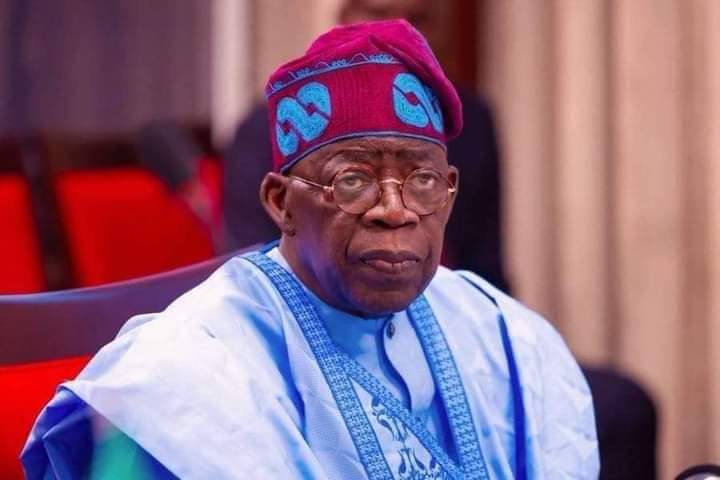
The federal government (FG) has launched a $3.5 billion World Bank-backed social investment package under the Renewed Hope Development Plan (2026-2030), positioning poverty reduction as a driver of long-term economic growth and resilience. Unveiled by President Bola Ahmed Tinubu under the Renewed Hope agenda, the package comprises the Nigeria Community Action for Resilience and Economic Stimulus Additional Financing, the Sustainable Livelihoods for Improved Food Security and Empowerment (SOLID) initiative, and the Human Capital Opportunities for Prosperity and Equity (HOPE) programme. The interventions target poor households, small businesses, internally displaced persons and essential public services, while strengthening education, healthcare, governance and livelihoods through World Bank financing, digital monitoring and community oversight.
DECISION HIGHLIGHT
The FG is repositioning social investment from welfare expenditure to productive economic infrastructure, seeking to convert poverty reduction into a platform for human capital formation and long-term growth.
DECISION MEMO
The significance of the new social investment package lies less in its scale than in its strategic framing.
Rather than presenting poverty alleviation as a short-term social intervention, the government has linked it directly to productivity, economic resilience and its ambition of building a $1 trillion economy by 2030. The package therefore reflects a policy shift from consumption support towards investment in economic participation.
The programmes arrive against a backdrop of persistent external pressures, including the lingering effects of the COVID-19 pandemic, the Russia-Ukraine conflict and instability in the Middle East, all of which have weakened household incomes, disrupted supply chains and increased economic vulnerability.
By combining livelihood support with investments in education, healthcare and institutional capacity, government is attempting to strengthen both immediate household resilience and longer-term productive capacity. The strategy broadens the traditional concept of social protection by integrating enterprise support, governance reforms and human capital development within a single policy framework.
President Tinubu described the initiatives as evidence of policy execution rather than policy intention.
“These are not just programmes; they are promises kept. Under a renewed hope agenda, we came into office pledging to reform our economy, secure the nation, and invest in our people. Today, we act on that pledge, protecting the vulnerable, empowering communities, and building the human capital that will carry Nigeria forward.”
Equally significant is the emphasis on implementation architecture. Government’s commitment to digital tracking, transparency and community oversight suggests recognition that the effectiveness of social investment depends less on budgetary allocations than on delivery credibility. In previous intervention programmes, weak accountability frequently undermined intended outcomes. Embedding monitoring mechanisms within programme design therefore represents an effort to improve both public confidence and development impact.
The package also illustrates an evolving relationship between fiscal policy and development finance.
DATA BOX
- Programme value: US$3.5 billion
- Funding partner: World Bank
- Implementation framework: Renewed Hope Development Plan (2026-2030)
- Flagship programmes:
- Nigeria Community Action for Resilience and Economic Stimulus Additional Financing
- Sustainable Livelihoods for Improved Food Security and Empowerment initiative
- Human Capital Opportunities for Prosperity and Equity programme
- Priority beneficiaries:
- Poor households
- Small businesses
- Internally displaced persons
- Vulnerable communities
- Priority sectors:
- Education
- Healthcare
- Livelihood support
- Governance strengthening
- Accountability measures:
- Digital tracking
- Community oversight
- Transparency mechanisms
- Strategic objective: Support Nigeria’s ambition of becoming a US$1 trillion economy by 2030
WHO WINS / WHO LOSES
Winners: Vulnerable households, micro, small and medium-sized enterprises, internally displaced persons, state governments implementing social programmes, education and healthcare institutions, and development finance partners supporting inclusive growth.
Losers: Communities excluded by weak implementation, inefficient delivery systems and institutions unable to meet the programme’s accountability requirements.
POLICY SIGNALS
The Federal Government is integrating social protection into its broader economic reform agenda, signalling that poverty reduction, human capital development and enterprise support are now being treated as complementary growth policies rather than isolated welfare interventions. Greater emphasis on transparency and digital monitoring also reflects a stronger focus on programme accountability.
INVESTOR SIGNAL
The package reinforces government commitment to sustaining economic reforms alongside social stability. Improved household resilience, stronger human capital and support for small businesses could expand domestic demand and strengthen long-term economic productivity, provided implementation remains credible and measurable.
RISK RADAR
Implementation remains the defining risk. Weak coordination across federal and state institutions, governance lapses, delays in fund disbursement, inadequate beneficiary targeting and limited monitoring capacity could reduce programme effectiveness. The economic impact will depend less on funding commitments than on sustained execution, transparency and measurable improvements in livelihoods and productive capacity.
Discover more from StakeBridge Media
Subscribe to get the latest posts sent to your email.