

By Johnson Emmanuel
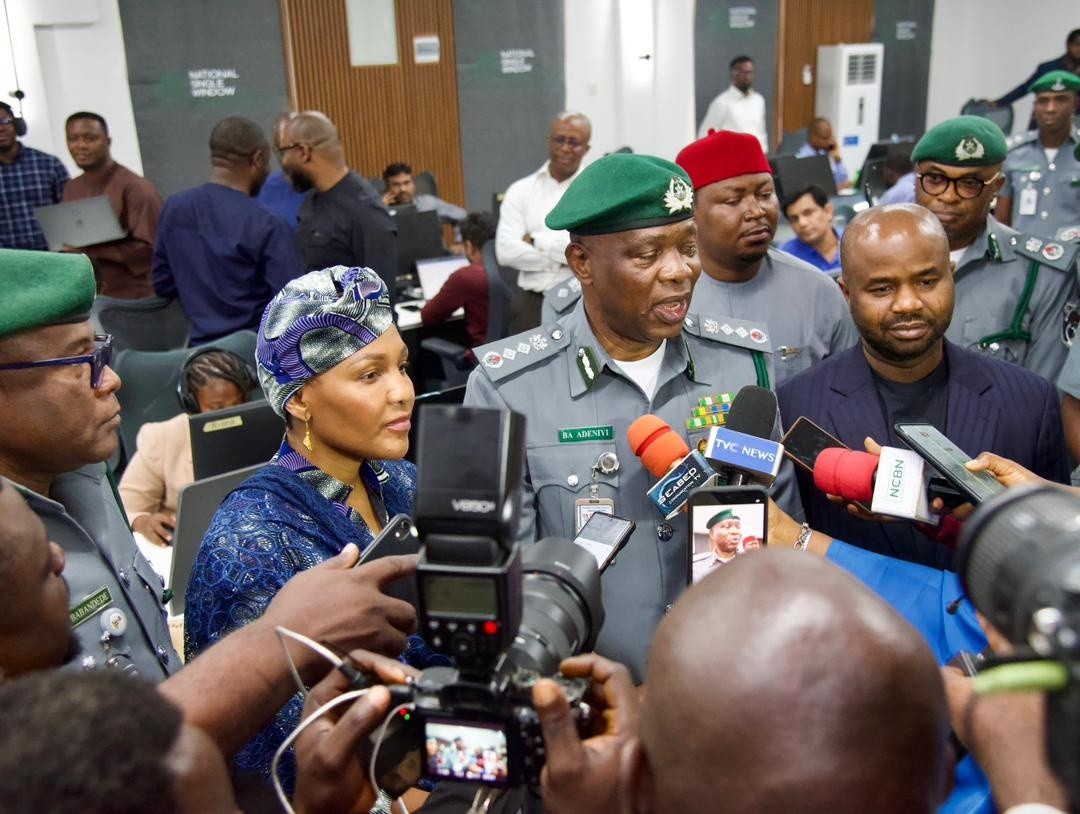
Following the Presidential Enabling Business Environment Council (PEBEC) two-day retreat for Heads of Ministries, Departments and Agencies (MDAs) and Reform Champions at the National Intelligence Agency (NIA) headquarters in Abuja, Nuhu Mustafa Mohamed, representing the Reform Champion of the Nigeria Customs Service Trade Facilitation Unit, outlined the Service’s reform journey and performance outcomes. Mohamed disclosed that extensive stakeholder engagement, continuous process reviews, mystery shopping exercises and service delivery assessments were deployed across the NCS to improve operational efficiency and business facilitation. These efforts contributed to the Service’s emergence as one of four ‘Super MDAs’ in the Business Environment and Enterprise Performance Accelerator (BEEPA) Report. He further highlighted that under the leadership of Bashir Adewale Adeniyi, Comptroller-General of Customs, innovation, modernisation and digital transformation remain central to the institution’s reform agenda, particularly through the deployment of the B’Odogwu Unified Customs Management System.
According to Mohamed, the Service has prioritised “engagement with key officers, continuous reviews, and a strong focus on mystery shopping and service delivery standards.”
DECISION HIGHLIGHT
The Nigeria Customs Service is institutionalising digital trade facilitation and performance measurement as core instruments for improving Nigeria’s business environment and border administration efficiency.
DECISION MEMO
The significance of the development extends beyond the recognition received in the Business Environment and Enterprise Performance Accelerator assessment.
Historically, customs administrations have been viewed primarily as revenue collection institutions. Increasingly, however, global trade competitiveness is determined by how efficiently customs authorities facilitate cargo movement, reduce clearance delays and digitise border procedures.
The NCS appears to be positioning itself within this modern trade facilitation framework.
The emphasis on mystery shopping, service delivery standards and internal performance reviews suggests a deliberate attempt to move beyond procedural compliance towards measurable user experience and institutional accountability. Such approaches are increasingly common among reform-oriented public institutions seeking to improve operational credibility.
The deployment of the B’Odogwu Unified Customs Management System is particularly significant because digitalisation remains one of the most effective tools for reducing transaction costs, minimising administrative bottlenecks and improving transparency across trade processes.
The recognition as a Super Ministry, Department and Agency within the Business Environment and Enterprise Performance Accelerator framework may also indicate that customs reforms are beginning to produce observable outcomes within Nigeria’s broader ease-of-doing-business agenda.
More fundamentally, efficient customs administration affects far more than border operations. It influences trade competitiveness, investment attractiveness, supply chain efficiency and government revenue mobilisation.
The broader policy implication is that customs reform is increasingly becoming an economic competitiveness strategy rather than merely an administrative exercise.
DATA BOX
Institution
- Nigeria Customs Service
PEBEC Engagement
- Event: Two-Day Retreat for Heads of Ministries, Departments and Agencies and Reform Champions
- Venue: National Intelligence Agency, Abuja
Key Reform Components
- Stakeholder engagement
- Continuous process reviews
- Mystery shopping exercises
- Service delivery monitoring
- Trade facilitation reforms
- Digital transformation initiatives
Recognition
- BEEPA Status: Super MDA
- Ranking Category: One of four top-performing MDAs
Digital Reform Platform
- B’Odogwu Unified Customs Management System
- Functions:
- Customs process management
- Report generation
- Operational interventions
- Trade facilitation support
Leadership
- Bashir Adewale Adeniyi, Comptroller-General of Customs
- Nuhu Mustafa Mohamed, Nigeria Customs Service Trade Facilitation Unit
WHO WINS / WHO LOSES
Winners
- Importers and exporters benefiting from improved trade facilitation.
- Businesses dependent on efficient cargo clearance processes.
- Investors seeking predictable trade and logistics systems.
- Government through improved customs administration and revenue efficiency.
- Port and logistics operators interacting with customs processes.
Potential Losers
- Participants benefiting from manual and opaque administrative processes.
- Operators unable to adapt to increasing digitalisation and compliance requirements.
- Informal intermediaries whose roles diminish under automated systems.
POLICY SIGNALS
- Trade facilitation remains a key component of Nigeria’s business environment reforms.
- Digital transformation is increasingly central to customs administration.
- Performance measurement is becoming embedded within public sector reform.
- Government is linking institutional efficiency to economic competitiveness.
- Ease-of-doing-business reforms are shifting towards implementation and measurable outcomes.
INVESTOR SIGNAL
The recognition of the NCS within the Business Environment and Enterprise Performance Accelerator framework provides a positive signal regarding institutional reform momentum. Efficient customs systems reduce transaction costs, improve supply chain reliability and strengthen investor confidence. Continued digitalisation through the B’Odogwu Unified Customs Management System may further improve trade predictability, an important consideration for manufacturers, exporters and foreign investors evaluating Nigeria’s operating environment.
RISK RADAR
- Delays in full digital adoption across customs operations.
- Resistance to institutional change within legacy systems.
- Technology integration and interoperability challenges.
- Cybersecurity risks associated with increased digitisation.
- Inconsistent implementation across operational locations.
- Capacity gaps affecting long-term sustainability of reforms.
The strategic takeaway is that the NCS is increasingly framing customs administration as a trade facilitation function rather than solely a revenue collection mechanism. If sustained, the combination of performance monitoring, digitalisation and trade-focused reforms could strengthen Nigeria’s competitiveness within regional and global trade networks.
Discover more from StakeBridge Media
Subscribe to get the latest posts sent to your email.