

By Johnson Emmanuel
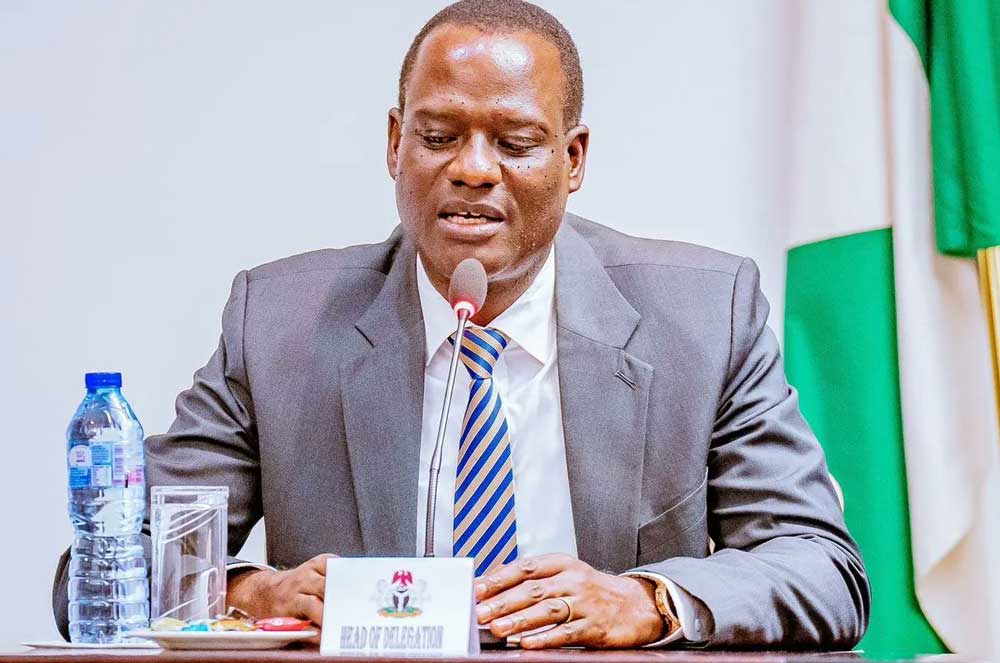
The Minister of Finance and Coordinating Minister of the Economy, Mr. Taiwo Oyedele, recently told the Senate Committee on Finance in Abuja, chaired by Senator Sani Musa, that claims Nigeria accumulated N80 trillion in new debt under President Bola Ahmed Tinubu misrepresent the country’s fiscal position. Oyedele explained that Nigeria’s public debt stood at about N75 trillion when the current administration assumed office, but subsequent depreciation of the naira increased the domestic value of existing foreign currency debt by more than N40 trillion without additional borrowing. He added that approximately N33 trillion arose from the National Assembly’s securitisation of inherited Ways and Means advances, while much of the government’s domestic borrowing has been used to refinance maturing obligations rather than create new debt. The hearing also reviewed implementation of the 2026 capital budget.
DECISION HIGHLIGHT
Mr. Oyedele argued that Nigeria’s debt trajectory should be assessed through the composition of the debt stock rather than headline figures, maintaining that accounting adjustments and refinancing explain a substantial portion of the reported increase.
DECISION MEMO
The FG is seeking to redefine the debate around Nigeria’s public debt by separating accounting movements from actual borrowing activity.
According to Oyedele, much of the increase in Nigeria’s reported debt stock reflects technical adjustments rather than fresh borrowing. He noted that the depreciation of the naira automatically raised the domestic value of existing foreign currency obligations, adding more than N40 trillion to official debt statistics without any new external loans.
Oyedele also explained that approximately N33 trillion was added following the National Assembly’s approval of the securitisation of Ways and Means advances accumulated under the previous administration. The exercise, he argued, formally recognised existing liabilities instead of creating new obligations.
He further maintained that domestic borrowing figures should be interpreted with similar caution because a significant proportion represents refinancing of maturing debt.
He said: “The actual amount this administration has borrowed is nowhere near what many people believe. Even for domestic borrowing, much of it is refinancing. Debt that was borrowed previously matures, and the government raises new debt to refinance it. That is not new borrowing.”
Oyedele maintained that the government’s borrowing strategy remains focused on financing infrastructure and investments capable of generating economic returns above their cost, reinforcing the objective of long-term debt sustainability.
The hearing also highlighted legislative concern over public expenditure. Senator Tahir Monguno and Senator Adamu Aliero questioned the pace of capital budget implementation, while Senator Sani Musa, Chairman of the Senate Committee on Finance, expressed confidence that implementation would accelerate and disclosed that lawmakers were considering a performance-based budgeting framework to improve expenditure efficiency.
DATA BOX
- Public debt at commencement of current administration: About N75 trillion
- Increase from foreign exchange revaluation: More than N40 trillion
- Securitised Ways and Means advances: About N33 trillion
- Nature of domestic borrowing: Significant refinancing of maturing obligations
- Government borrowing priority: Infrastructure and long-term economic value creation
- Budget reform under consideration: Performance-based budgeting
WHO WINS / WHO LOSES
Winners: Investors, policymakers and analysts seeking greater transparency on Nigeria’s sovereign debt composition, alongside institutions promoting stronger fiscal accountability.
Losers: Assessments that rely solely on headline debt figures without accounting for exchange rate revaluation, debt regularisation and refinancing, and fiscal credibility if implementation fails to match policy communication.
POLICY SIGNALS
The Federal Government is signalling a stronger emphasis on debt quality, borrowing purpose and fiscal transparency. The proposed adoption of performance-based budgeting further indicates an intention to strengthen expenditure accountability and align borrowing more closely with measurable economic outcomes.
INVESTOR SIGNAL
The clarification provides investors with additional context for interpreting Nigeria’s debt profile by distinguishing accounting-driven increases from fresh financing requirements. However, sovereign risk will continue to be assessed primarily through revenue generation, debt servicing capacity, fiscal discipline and macroeconomic stability.
RISK RADAR
Although exchange rate revaluation and debt regularisation explain part of the increase in reported public debt, elevated debt servicing costs remain a significant fiscal challenge. Continued exchange rate volatility, weak revenue mobilisation, refinancing pressures and delays in capital budget execution could constrain debt sustainability unless matched by stronger economic growth and improved fiscal performance.
Discover more from StakeBridge Media
Subscribe to get the latest posts sent to your email.